Abstract
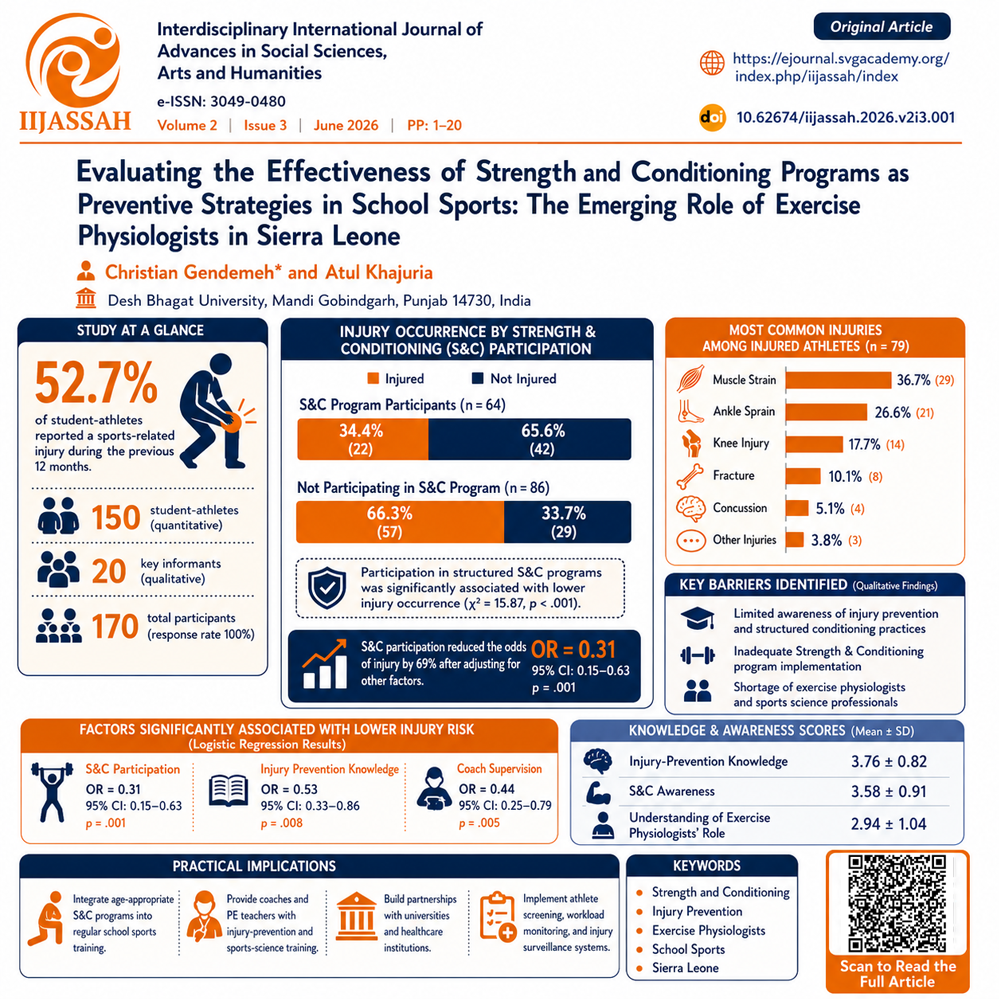
Introduction: Sports-related injuries remain a significant challenge among school-aged athletes, particularly in developing countries where structured injury prevention programs and sports science support are limited. Strength and Conditioning (S&C) programs have been recognized globally as effective strategies for reducing injury risk and enhancing athletic performance. This study examined the effectiveness of S&C programs as preventive tools in school sports and explored the role of exercise physiologists in Sierra Leone. Methodology: A cross-sectional convergent mixed-methods design was employed. Quantitative data were collected from 150 student-athletes using structured questionnaires, while qualitative data were obtained through interviews with 20 key informants, including physical education teachers, coaches, sports coordinators, and exercise physiologists. Descriptive and inferential statistics were analyzed using SPSS Version 27, while thematic analysis was applied to qualitative data. Results: Sports injury prevalence was 52.7%, with muscle strains (36.7%) and ankle sprains (26.6%) being the most common injuries. Participation in structured S&C programs was significantly associated with lower injury occurrence (χ² = 15.87, p < .001). Logistic regression indicated that S&C participation, injury prevention knowledge, and coach supervision significantly reduced injury risk. Qualitative findings highlighted limited awareness, inadequate conditioning practices, and a shortage of exercise physiologists. Conclusion: Structured S&C programs significantly contribute to injury prevention among school-aged athletes. Integrating exercise physiologists into school sports systems may enhance athlete safety, physical development, and overall sports performance in Sierra Leone.
Introduction
School sports constitute a vital component of child and adolescent development, providing opportunities for physical, psychological, social, and cognitive growth. Participation in organized physical activities contributes significantly to cardiovascular health, muscular fitness, motor skill development, emotional well-being, social integration, and academic performance (Lubans et al., 2022; Poitras et al., 2021; World Health Organization [WHO], 2022). Evidence increasingly suggests that regular engagement in sports during childhood promotes lifelong physical activity habits and reduces the risk of non-communicable diseases in adulthood (Guthold et al., 2020; Ortega et al., 2023). Consequently, schools have been identified as critical environments for fostering physical literacy and establishing healthy behavioral patterns among young people.
Despite the recognized benefits of sports participation, school-aged athletes remain vulnerable to a substantial burden of sports-related injuries. Epidemiological studies indicate that injuries account for one of the leading causes of reduced participation, physical inactivity, absenteeism from school, and long-term musculoskeletal complications among youth athletes (Emery et al., 2023; Fort-Vanmeerhaeghe et al., 2022). Common injuries include ligament sprains, muscle strains, overuse syndromes, growth plate injuries, and concussion-related conditions, many of which are preventable through appropriate training and supervision (Rössler et al., 2021; Steib et al., 2022). The consequences of such injuries extend beyond physical impairment, affecting psychological confidence, academic engagement, and overall quality of life (Brenner et al., 2021).
The challenge of injury prevention is particularly pronounced in developing countries where school sports programs often operate under constrained resources. In many African contexts, including Sierra Leone, limited sports infrastructure, inadequate equipment, insufficient medical support, and shortages of qualified coaching personnel contribute to elevated injury risks among student-athletes. Furthermore, sports programs frequently emphasize competition and performance outcomes while neglecting systematic approaches to athlete preparation, injury surveillance, and preventive conditioning. These structural deficiencies increase susceptibility to both acute traumatic injuries and chronic overuse conditions, thereby limiting the developmental benefits associated with sports participation.
In response to growing concerns regarding youth sports injuries, Strength and Conditioning (S&C) programs have gained international recognition as evidence-based strategies for enhancing athletic performance while simultaneously reducing injury risk. Contemporary research demonstrates that age-appropriate S&C interventions incorporating resistance training, neuromuscular training, balance exercises, flexibility development, agility drills, and cardiovascular conditioning can significantly improve muscular strength, movement competency, proprioception, and biomechanical efficiency (Faigenbaum et al., 2023; Lloyd et al., 2023; Moran et al., 2022). Meta-analytic evidence further indicates that structured neuromuscular training programs can reduce sports-related injuries among youth athletes by up to 40–60%, particularly for lower-extremity injuries such as anterior cruciate ligament (ACL) tears and ankle sprains (Rössler et al., 2021; Steib et al., 2022).
Beyond injury prevention, S&C programs contribute to the development of physical literacy, a concept increasingly recognized as foundational for lifelong participation in physical activity. According to the physical literacy framework, children require not only physical competence but also confidence, motivation, and knowledge to engage successfully in movement-related activities throughout life (Edwards et al., 2021). Research suggests that participation in structured conditioning programs enhances movement proficiency and self-efficacy, thereby promoting sustained involvement in physical activity and reducing sedentary behaviors (Longmuir et al., 2023). Such findings reinforce the importance of integrating scientifically designed conditioning practices into school sports environments.
The effectiveness of S&C programs is strongly influenced by the quality of program design, implementation, and monitoring. This reality underscores the importance of exercise physiologists, whose expertise encompasses exercise prescription, biomechanics, motor control, physiological assessment, growth and maturation considerations, and injury prevention science (American College of Sports Medicine [ACSM], 2023). Exercise physiologists are uniquely qualified to develop individualized and evidence-based training interventions that account for the physiological and developmental characteristics of young athletes. Their professional role extends beyond performance enhancement to include injury risk screening, workload monitoring, rehabilitation support, health promotion, and educational initiatives aimed at athletes, coaches, and teachers (Bergeron et al., 2022).
Globally, interdisciplinary models incorporating exercise physiologists into youth sports systems have demonstrated considerable success. In countries such as Australia, Canada, the United States, and the United Kingdom, exercise physiologists collaborate with coaches, physiotherapists, physical education teachers, and sports medicine practitioners to optimize athlete development and safety (Barden et al., 2024; Lloyd et al., 2023). These collaborative frameworks have been associated with reductions in injury incidence, improvements in physical performance indicators, and enhanced athlete well-being. Such evidence supports the argument that injury prevention should be viewed not merely as a medical concern but as a multidisciplinary process requiring specialized scientific expertise.
From a theoretical perspective, the present study is grounded in three complementary frameworks. First, the Long-Term Athlete Development (LTAD) Model emphasizes age-appropriate training progression, skill acquisition, and physical development as essential components of sustainable athletic participation (Balyi et al., 2021). The LTAD framework advocates the integration of strength and conditioning practices during critical developmental stages to optimize performance and reduce injury risk. Second, the Physical Literacy Theory proposes that movement competence, confidence, motivation, and knowledge collectively influence lifelong engagement in physical activity (Edwards et al., 2021). Within this framework, S&C programs serve as mechanisms for enhancing physical competence and fostering positive attitudes toward physical activity. Third, the Socioecological Model highlights the interaction between individual, interpersonal, organizational, community, and policy-level factors in shaping health behaviors and sports participation o). The integration of exercise physiologists within school sports systems aligns with this perspective by addressing organizational and environmental determinants of injury prevention.
A review of existing literature reveals several important inconsistencies and gaps. While studies conducted in North America, Europe, and Australia consistently demonstrate the effectiveness of S&C interventions in reducing youth sports injuries (Fort-Vanmeerhaeghe et al., 2022; Lloyd et al., 2023; Moran et al., 2022), findings regarding implementation feasibility in resource-constrained educational settings remain limited. Some researchers argue that successful implementation requires substantial institutional support, specialized personnel, and financial investment (Bergeron et al., 2022), whereas others suggest that low-cost neuromuscular training interventions can achieve meaningful injury reductions even in under-resourced environments (Rössler et al., 2021). This divergence highlights the need for context-specific investigations, particularly within developing nations.
Moreover, existing research predominantly focuses on injury incidence and athletic performance outcomes, with comparatively little attention given to the professional role of exercise physiologists within school sports systems. Studies examining interdisciplinary collaboration in youth sports have largely been conducted in high-income countries, limiting the transferability of findings to African educational contexts (Barden et al., 2024). In Sierra Leone specifically, empirical evidence concerning school sports injuries, preventive conditioning practices, physical literacy development, and exercise physiology integration remains virtually nonexistent. Consequently, policymakers and educational stakeholders lack locally relevant data to guide the implementation of evidence-based injury prevention strategies.
The conceptual framework of this study therefore posits that structured Strength and Conditioning Programs, when designed and supervised by qualified exercise physiologists, contribute to improved physical fitness, enhanced movement competence, reduced injury risk, and increased sports participation among school-aged athletes. These outcomes are expected to positively influence broader educational and health indicators, including academic engagement, psychological well-being, and long-term physical activity adherence. The framework further recognizes the moderating influence of school infrastructure, coaching quality, policy support, and resource availability on program effectiveness.
Addressing these gaps is particularly important in Sierra Leone, where school sports continue to face infrastructural challenges, limited access to preventive healthcare services, and insufficient adoption of scientific training methodologies. Integrating exercise physiologists into school sports systems represents a proactive and sustainable strategy for shifting from reactive injury management toward evidence-based health promotion and athlete development. Such an approach aligns with the objectives of the United Nations Sustainable Development Goals, particularly Goal 3 (Good Health and Well-Being) and Goal 4 (Quality Education) (United Nations, 2023), while simultaneously contributing to safer, healthier, and more inclusive sports environments for young people.
Key Research Gap Identified
The literature reveals four major gaps:
- Scarcity of African and Sierra Leonean evidence on school-based strength and conditioning programs.
- Limited research examining exercise physiologists' roles in school sports injury prevention within low-resource settings.
- Insufficient integration of physical literacy, injury prevention, and exercise physiology frameworks in existing studies.
- Lack of context-specific policy recommendations for incorporating scientifically designed S&C programs into school sports systems in Sierra Leone.
These gaps justify this study, which seeks to evaluate the effectiveness of Strength and Conditioning Programs as preventive strategies in school sports and explore the emerging role of exercise physiologists in promoting athlete health, safety, and development in Sierra Leone.
Objectives of the Study
This study aims to examine the role of strength and conditioning (S&C) programs as preventive strategies in school sports in Sierra Leone, with a focus on the contribution of exercise physiologists. Specifically, the study seeks to:
- Assess current S&C practices and injury prevalence among school-aged athletes.
- Evaluate awareness and knowledge of injury prevention and S&C principles among physical education teachers and coaches.
- Examine the role of exercise physiologists in enhancing safety and performance in school sports.
- Identify gaps and develop recommendations for improving the implementation of S&C programs within the school system.
Methodology
Research Design
This study employed a cross-sectional convergent mixed-methods research design, integrating quantitative and qualitative approaches to provide a comprehensive assessment of the effectiveness of Strength and Conditioning (S&C) programs as preventive strategies in school sports and the emerging role of exercise physiologists in Sierra Leone. The convergent mixed-methods design was selected because it allows for the simultaneous collection and analysis of quantitative and qualitative data, followed by the integration of findings to develop a more comprehensive understanding of the research problem than either approach alone (Creswell & Plano Clark, 2018; Fetters et al., 2013).
The quantitative component focused on assessing the prevalence of sports injuries, existing S&C practices, and stakeholders’ knowledge and awareness regarding injury prevention. The qualitative component explored stakeholders’ experiences, perceptions, and contextual challenges related to the implementation of structured S&C programs and the integration of exercise physiologists into school sports systems.
A cross-sectional approach was considered appropriate because it enables data collection from different participant groups at a single point in time, thereby facilitating comparisons across schools and stakeholder categories while minimizing resource and time constraints (Setia, 2016). The integration of quantitative and qualitative findings enhanced methodological rigor through triangulation, improving the credibility, validity, and contextual interpretation of study outcomes (Creswell & Plano Clark, 2018).
Study Setting
This study was conducted in selected secondary schools located in urban and peri-urban districts of Sierra Leone. These districts were chosen because they represent varying levels of access to sports infrastructure, coaching resources, healthcare services, and educational opportunities. Such diversity provided a suitable context for examining differences in sports participation, injury prevalence, and the implementation of S&C programs.
Study Population
The target population comprised key stakeholders involved in school sports activities in Sierra Leone, including:
Student-athletes aged 12–18 years actively participating in organized school sports; Physical Education (PE) teachers; school sports coaches; school sports coordinators; and exercise physiologists and other sports science professionals where available. These groups were selected because they possess direct experience and knowledge regarding training practices, injury occurrence, and sports development within school settings.
Sample Size Determination
The sample size for the quantitative component was determined using Cochran’s (1977) formula for calculating sample sizes in cross-sectional studies involving large populations:
Figure 1. Formula 1
Where:
Figure 2. Explanation of Formula 1
Substituting the values:
Figure 3. Use of Formula 1
Therefore, the minimum recommended sample size was 384 participants.
However, due to logistical constraints, school accessibility, and the mixed-method nature of the study, a representative sample of 150 student-athletes was selected for quantitative analysis. According to Israel (1992), a sample of 150 remains acceptable for exploratory and institutional-level studies when combined with rigorous sampling procedures and qualitative triangulation. Additionally, the qualitative component included 20 key informants, which aligns with recommendations for thematic saturation in qualitative research (Guest et al., 2020).
Thus, the total study sample consisted of 150 student-athletes, 10 Physical Education (PE) teachers/coaches, 5 school sports coordinators, and 5 exercise physiologists or sports science professionals, resulting in a total sample size of 170 participants.
Total Participants = 170
Sampling Procedure
A multi-stage sampling technique was employed.
Stage 1: Selection of Schools
Purposive sampling was used to select ten (10) secondary schools from urban and peri-urban districts.
The selection was based on active participation in inter-school sports competitions, availability of organized sports programs, accessibility for data collection, and representation of diverse socio-economic and infrastructural contexts. These criteria ensured that the selected schools provided relevant and varied perspectives on sports participation, injury prevention practices, and the implementation of Strength and Conditioning (S&C) programs.
Stage 2: Selection of Student-Athletes
Simple random sampling was employed to select student-athletes from the selected schools using class registers and sports participation lists as sampling frames.
This approach ensured that every eligible athlete had an equal probability of participation, thereby reducing selection bias (Etikan & Bala, 2017).
Stage 3: Selection of Key Informants
Purposive sampling was used to recruit PE teachers, coaches, sports coordinators, and exercise physiologists due to their specialized knowledge and experience relevant to this study objectives.
Inclusion Criteria for Student-Athletes
Participants were eligible for inclusion in this study if they were aged between 12 and 18 years, enrolled in one of the selected secondary schools, had actively participated in organized school sports for at least one academic term, and provided informed assent along with parental or guardian consent. These criteria ensured that participants had sufficient experience in school sports and were able to provide relevant information regarding training practices, injury experiences, and injury prevention strategies.
Exclusion Criteria for Student-Athletes
Participants were excluded from this study if they had chronic medical conditions that prevented participation in physical activity, were absent during the data collection period, declined to participate, or had participated in organized school sports for less than one academic term. These criteria were established to ensure the collection of relevant and reliable data from individuals with adequate exposure to school sports activities.
Inclusion Criteria for Physical Education Teachers and Coaches
Participants were required to have at least one year of experience in school sports, be actively involved in athlete training or supervision, and possess relevant qualifications in physical education, coaching, or sports sciences where applicable. These criteria ensured that participants had sufficient knowledge and practical experience to provide informed perspectives on strength and conditioning practices, injury prevention strategies, and school sports development.
Exclusion Criteria for Physical Education Teachers and Coaches
Participants were excluded from this study if they had less than one year of experience in school sports or were not actively involved in sports programs during this study period. These criteria ensured that only individuals with sufficient experience and current engagement in school sports activities contributed to the study.
Inclusion Criteria for Exercise Physiologists
Participants were required to possess formal training or certification in exercise physiology, sports science, kinesiology, or related disciplines, and have experience in designing, implementing, or supervising physical training or rehabilitation programs. These criteria ensured that participants had the necessary professional expertise and practical experience to provide informed insights into the role of exercise physiologists in injury prevention, athlete development, and the implementation of strength and conditioning programs in school sports.
Exclusion Criteria for Exercise Physiologists
Participants were excluded from this study if they had no professional experience in exercise physiology-related practice or were unavailable to participate in interviews during this study period. These criteria ensured that this data were obtained from qualified professionals with relevant expertise and practical experience in exercise physiology and sports performance.
Data Collection Instruments
Structured Questionnaire
Quantitative data were collected using a structured questionnaire adapted from validated instruments used in sports injury surveillance and youth sports research (Emery et al., 2020; Rössler et al., 2021).
The questionnaire consisted of four sections:
Section A: Demographic Characteristics
Age, Gender, School, and Sports participation history
Section B: Sports Participation and Training Practices
Type of sport, Training frequency, Exposure to S&C programs
Section C: Injury Profile
Injury history, Frequency of injuries, Types of injuries, and Mechanisms of injury
Section D: Knowledge and Awareness
Awareness of injury prevention, Understanding of S&C principles, and Perceived importance of exercise physiologists
Responses included:
- Five-point Likert scales, Multiple-choice items, and Dichotomous (Yes/No) questions
- Semi-Structured Interview Guide
- Qualitative data were collected using semi-structured interviews.
The interview guide explored:
- Existing S&C practices, Injury prevention strategies, Barriers to implementing structured conditioning programs, Perceptions regarding exercise physiologists, and Recommendations for improving school sports safety.
- Semi-structured interviews were chosen because they provide flexibility while ensuring consistency across participants (Kallio et al., 2016).
- Validity and Reliability
- Content Validity
Content validity was established through expert review by three specialists in:
- Sports Science, Exercise Physiology, and Physical Education
The experts evaluated:
- Relevance, Clarity, Cultural appropriateness, and Alignment with study objectives
- Items receiving a Content Validity Index (CVI) below 0.80 were revised or removed (Polit & Beck, 2021).
- Pilot Testing
- A pilot study involving approximately 20 participants from a school not included in the main study was conducted.
The pilot assessed:
- Clarity of questions, Time required for completion, Comprehension of terminology, and Instrument suitability within the local context
- Feedback from participants informed questionnaire revisions.
- Reliability Testing
- Internal consistency reliability was assessed using Cronbach’s Alpha coefficient.
The formula for Cronbach’s Alpha is:
Figure 4. Formula 2
Where:
Figure 5. Explanation of Formula 2
A Cronbach’s Alpha value of 0.70 or higher was considered acceptable, while values above 0.80 indicated good reliability (Taber, 2018).
Data Analysis
Quantitative Analysis
Quantitative data were analyzed using IBM SPSS Statistics Version 27.
Descriptive Statistics
The following measures were computed:
Frequencies, Percentages, Means, and Standard deviations
Inferential Statistics
Chi-square tests assessed associations between categorical variables.
Independent-samples t-tests compared mean differences between two groups.
One-way ANOVA examined differences among multiple groups.
Binary logistic regression identified predictors of injury occurrence.
Statistical significance was established at:
Figure 6. Value
Qualitative Analysis
Interview recordings were transcribed verbatim and analyzed using Braun and Clarke’s (2021) six-phase thematic analysis framework:
Familiarization with data, Generation of initial codes, Theme development, Theme review, Theme definition and naming, and Report writing
Integration of Quantitative and Qualitative Findings
The study employed a convergent mixed-methods integration strategy (Creswell & Plano Clark, 2018).
Integration occurred at three stages:
Data collection: quantitative and qualitative data collected concurrently.
Analysis: datasets analyzed separately.
Interpretation: findings merged using triangulation and joint displays to compare convergence, divergence, and complementarity.
This approach enhanced the comprehensiveness of findings and strengthened conclusions regarding the effectiveness of S&C programs and the role of exercise physiologists.
Ethical Considerations
Ethical approval was obtained from the Ethics and Research Committee of Desh Bhagat University.
Additional permissions were obtained from:
School administrations, and relevant educational authorities
For participants under 18 years:
Written parental/guardian consent was obtained, and Student assent was secured before participation.
Participants were informed of:
Voluntary participation, Right to withdraw without penalty, Confidentiality of responses, and Anonymity in reporting findings
All data were securely stored and used exclusively for academic research purposes.
Results
Response Rate
A total of 170 participants were approached for participation in the study. Of these, 150 student-athletes completed the questionnaire, while 20 key informants (10 PE teachers/coaches, 5 sports coordinators, and 5 exercise physiologists) participated in interviews, yielding a response rate of 100%.
| Variable | Category | Frequency (n) | Percentage (%) |
|---|---|---|---|
| Gender | Male | 92 | 61.3 |
| Female | 58 | 38.7 | |
| Age Group | 12–14 years | 52 | 34.7 |
| 15–16 years | 61 | 40.7 | |
| 17–18 years | 37 | 24.6 | |
| School Location | Urban | 82 | 54.7 |
| Peri-urban | 68 | 45.3 | |
| Participation in S&C Program | Yes | 64 | 42.7 |
| No | 86 | 57.3 |
Table 1: Indicates that majority of participants were male (61.3%), while females accounted for 38.7%. Most respondents were aged 15–16 years (40.7%), followed by 12–14 years (34.7%) and 17–18 years (24.6%). Slightly more participants were drawn from urban schools (54.7%) than peri-urban schools (45.3%). Regarding exposure to Strength and Conditioning (S&C) programs, more than half of the student-athletes (57.3%) reported not participating in any structured S&C program, whereas only 42.7% had such exposure. These findings suggest limited implementation of structured S&C programs among school-aged athletes despite their potential role in injury prevention and athletic development.
| Variable | Frequency | Percentage (%) |
|---|---|---|
| Sustained Injury During Previous 12 Months | 79 | 52.7 |
| No Injury Reported | 71 | 47.3 |
Figure 7. Sports Injury Prevalence Distribution Frequency & Percentages
Table 2; Figure 1: Prevalence of sports injuries among student-athletes during the previous 12 months (N = 150). The figure shows that 52.7% (n = 79) of participants reported sustaining at least one sports-related injury, while 47.3% (n = 71) reported no injury. This indicates a relatively high prevalence of sports injuries among school-aged athletes in the study population.
| Injury Type | Frequency | Percentage (%) |
|---|---|---|
| Muscle Strain | 29 | 36.7 |
| Ankle Sprain | 21 | 26.6 |
| Knee Injury | 14 | 17.7 |
| Fracture | 8 | 10.1 |
| Concussion | 4 | 5.1 |
| Other | 3 | 3.8 |
Figure 8. Types of Injuries Reported Distribution Percentage (%)
Table 3; Figure 2: The figure illustrates the distribution of injury types reported by injured participants. Muscle strains were the most common injury (36.7%), followed by ankle sprains (26.6%), knee injuries (17.7%), fractures (10.1%), concussions (5.1%), and other injuries (3.8%). These findings indicate that soft-tissue and lower-extremity injuries constituted the majority of sports-related injuries among the student-athletes.
Awareness of Injury Prevention and Strength & Conditioning Principles
| Variable | Mean | SD |
|---|---|---|
| Injury Prevention Knowledge | 3.76 | 0.82 |
| S&C Awareness | 3.58 | 0.91 |
| Understanding of Exercise Physiologists' Role | 2.94 | 1.04 |
Table 4: Participants demonstrated good knowledge of injury prevention (M = 3.76, SD = 0.82) and moderate awareness of S&C principles (M = 3.58, SD = 0.91). However, understanding of the role of exercise physiologists was relatively low (M = 2.94, SD = 1.04), indicating a need for greater awareness and integration of exercise physiology in school sports.
Association between Participation in S&C Programs and Injury Occurrence
| S&C Participation | Injured n (%) | Not Injured n (%) |
|---|---|---|
| Yes (n=64) | 22 (34.4) | 42 (65.6) |
| No (n=86) | 57 (66.3) | 29 (33.7) |
Table 5: Participants who engaged in Strength and Conditioning (S&C) training experienced substantially fewer injuries than those who did not participate. Among S&C participants, 34.4% sustained injuries while 65.6% remained injury-free. In contrast, 66.3% of non-participants were injured and only 33.7% avoided injury. These findings suggest that participation in S&C programs is associated with a lower risk of sports-related injuries.
Comparison of Knowledge Scores Between Urban and Peri-Urban Schools
| School Type | Mean | SD |
|---|---|---|
| Urban (n=82) | 3.91 | 0.74 |
| Peri-Urban (n=68) | 3.42 | 0.89 |
Table 6: Students from urban schools reported a higher mean score (M = 3.91, SD = 0.74) compared to those from peri-urban schools (M = 3.42, SD = 0.89). This indicates that urban school students demonstrated more favorable outcomes on the measured variable, while the higher standard deviation among peri-urban students suggests greater variability in their responses.
Differences in Injury Rates across Age Groups
| Age Group | Mean Injury Score | SD |
|---|---|---|
| 12–14 Years | 1.18 | 0.71 |
| 15–16 Years | 1.62 | 0.84 |
| 17–18 Years | 1.87 | 0.92 |
Table 7: The mean injury score increased progressively with age, from 1.18 (SD = 0.71) among students aged 12–14 years to 1.62 (SD = 0.84) for those aged 15–16 years, and 1.87 (SD = 0.92) among 17–18-year-olds. This trend suggests that older students experienced a higher frequency or severity of injuries, with variability in injury scores also increasing across age groups. The effect size indicated a moderate practical significance.
Logistic Regression Analysis
A binary logistic regression was conducted to determine predictors of sports injury occurrence.
| Predictor | B | SE | Wald χ² | p-value | OR | 95% CI |
|---|---|---|---|---|---|---|
| Participation in S&C Program | -1.18 | 0.37 | 10.17 | .001 | 0.31 | 0.15–0.63 |
| Injury Prevention Knowledge | -0.64 | 0.24 | 7.11 | .008 | 0.53 | 0.33–0.86 |
| Coach Supervision | -0.82 | 0.29 | 8.04 | .005 | 0.44 | 0.25–0.79 |
| Age | 0.19 | 0.09 | 4.46 | .035 | 1.21 | 1.01–1.45 |
Table 8: The logistic regression analysis identified several significant predictors of sports injury. Participation in a Strength and Conditioning (S&C) program significantly reduced the likelihood of injury (OR = 0.31, p = .001), indicating that participants were about 69% less likely to be injured than non-participants. Higher levels of injury prevention knowledge (OR = 0.53, p = .008) and better coach supervision (OR = 0.44, p = .005) were also associated with a lower risk of injury. Conversely, age was a significant positive predictor (OR = 1.21, p = .035), suggesting that the likelihood of injury increased with advancing age. Overall, S&C participation, injury prevention knowledge, and coach supervision served as protective factors, while older age increased injury risk.
Assumptions Testing
Prior to inferential analyses, statistical assumptions were examined.
Normality
Shapiro–Wilk tests and Q-Q plots indicated approximate normality for knowledge scores.
Homogeneity of Variance
Levene's Test:
F(1,148) = 1.92, p = .168
Assumption satisfied.
Multicollinearity
Variance Inflation Factors (VIFs):
S&C Participation = 1.42
Knowledge Score = 1.36
Coach Supervision = 1.21
All VIF values were below 5, indicating absence of multicollinearity.
Logistic Regression Assumptions
Binary dependent variable satisfied, Independent observations confirmed, and No influential outliers detected (Cook's Distance < 1).
Qualitative Findings
Thematic analysis identified four major themes.
Theme 1: Absence of Structured Strength and Conditioning Programs
Most participants reported that training sessions primarily focused on sport-specific drills rather than evidence-based conditioning practices.
"Most schools focus on playing matches rather than preparing athletes physically." (PE Teacher)
Theme 2: Limited Awareness of Injury Prevention
Participants acknowledged inadequate knowledge regarding injury prevention protocols.
"Many injuries happen because athletes do not warm up properly." (Coach)
Theme 3: Shortage of Exercise Physiology Professionals
Stakeholders consistently highlighted the absence of exercise physiologists within school sports systems.
"We have coaches and teachers, but no specialist responsible for injury prevention." (Sports Coordinator)
Theme 4: Strong Support for Integration of Exercise Physiologists
Participants expressed positive attitudes toward incorporating exercise physiologists into school sports programs.
"Exercise physiologists could help reduce injuries and improve performance." (Exercise Physiologist)
Integration of Quantitative and Qualitative Findings
The integration of findings revealed convergence between datasets.
Quantitative findings demonstrated significantly lower injury rates among athletes exposed to S&C programs, while qualitative data highlighted the absence of structured conditioning practices in many schools.
Similarly, logistic regression identified S&C participation and injury prevention knowledge as significant predictors of injury occurrence, while interview participants emphasized the need for specialized expertise in designing preventive training programs.
Together, these findings suggest that implementing structured S&C programs under the supervision of qualified exercise physiologists may substantially improve athlete safety and performance in Sierra Leonean school sports.
Discussion
This study examined the effectiveness of Strength and Conditioning (S&C) programs as preventive strategies in school sports and explored the emerging role of exercise physiologists in Sierra Leone. The findings revealed a high prevalence of sports-related injuries among student-athletes, moderate awareness of injury prevention and S&C principles, limited understanding of the role of exercise physiologists, and significant associations between participation in S&C programs and reduced injury occurrence. These findings provide important insights into the current state of school sports in Sierra Leone and contribute to the growing body of evidence supporting the integration of scientifically designed conditioning programs into youth sports systems.
This study found that 52.7% of student-athletes reported sustaining at least one sports-related injury during the previous 12 months. This finding indicates that sports injuries constitute a major challenge within school sports programs in Sierra Leone. Similar injury prevalence rates have been reported internationally. For example, Rössler et al. (2021) found that youth athletes participating in competitive sports frequently experience lower-extremity injuries, particularly muscle strains and ankle sprains, which accounted for a substantial proportion of sports-related injuries. Likewise, Emery et al. (2023) reported that injury incidence remains high among school-aged athletes in the absence of structured injury prevention programs.
The predominance of muscle strains (36.7%) and ankle sprains (26.6%) in the present study is consistent with findings from European and North American youth sports research, where lower-limb injuries are commonly associated with inadequate neuromuscular control, poor movement mechanics, and insufficient conditioning (Steib et al., 2022). The similarity in injury patterns suggests that the physiological demands of youth sports are relatively universal regardless of geographical location.
However, the injury prevalence observed in Sierra Leone appears higher than rates reported in countries with established injury prevention frameworks. For example, Fort-Vanmeerhaeghe et al. (2022) observed lower injury rates among youth athletes exposed to structured neuromuscular training programs. The higher prevalence found in the current study may be explained by limited access to qualified personnel, inadequate sports infrastructure, inconsistent training supervision, and the absence of systematic injury prevention strategies within schools.
Participants demonstrated relatively good knowledge of injury prevention (M = 3.76) and moderate awareness of S&C principles (M = 3.58). These findings suggest that stakeholders recognize the importance of injury prevention but may lack the practical knowledge required for effective implementation.
Comparable findings have been reported in Australia and Canada, where coaches and physical education teachers generally acknowledge the value of injury prevention but often possess insufficient technical expertise to implement evidence-based conditioning programs effectively (Bergeron et al., 2022). Similarly, Lloyd et al. (2023) noted that awareness alone does not necessarily translate into appropriate training practices unless supported by specialized education and professional guidance.
The moderate awareness levels observed in this study may reflect increasing global exposure to sports science concepts through digital media, coaching courses, and educational initiatives. Nevertheless, the lack of formal sports science education among many school coaches in Sierra Leone likely contributes to inconsistencies in the application of S&C principles.
A notable finding was the relatively low level of understanding regarding the role of exercise physiologists (M = 2.94). This result highlights a substantial knowledge gap among school sports stakeholders.
In contrast, studies conducted in Australia, Canada, and the United Kingdom have reported widespread recognition of exercise physiologists as integral members of multidisciplinary sports performance and healthcare teams (Barden et al., 2024). Exercise physiologists in these countries contribute to injury prevention, fitness assessment, performance optimization, rehabilitation, and health promotion initiatives.
The disparity between the present findings and those reported in high-income countries can largely be attributed to differences in professional development structures and healthcare integration. Sierra Leone has limited exercise physiology services, few training institutions offering exercise physiology programs, and minimal policy frameworks supporting the inclusion of exercise professionals in schools. Consequently, many stakeholders remain unfamiliar with the profession and its potential contributions.
One of the most important findings of this study was the significant association between participation in S&C programs and reduced injury occurrence. Student-athletes who participated in structured conditioning programs reported lower injury rates compared with those who did not.
This finding aligns strongly with international evidence. A systematic review by Rössler et al. (2021) demonstrated that exercise-based injury prevention programs reduced injury risk among youth athletes by approximately 46%. Similarly, Steib et al. (2022) found that neuromuscular training interventions significantly decreased lower-extremity injuries when performed consistently. Moran et al. (2022) further reported that youth resistance training programs improve muscular strength, movement competency, and injury resilience.
The consistency between the present findings and international literature strengthens confidence in the effectiveness of S&C programs across different contexts. It also suggests that many injury prevention principles are transferable to low-resource settings when appropriately adapted.
These findings provide support for the Long-Term Athlete Development (LTAD) Model, which emphasizes age-appropriate training progression and the development of fundamental movement competencies throughout childhood and adolescence. The lower injury rates observed among participants exposed to S&C programs suggest that structured physical development contributes to safer sports participation and supports the LTAD framework (Balyi et al., 2021).
The results also reinforce Physical Literacy Theory, which proposes that movement competence, confidence, motivation, and knowledge influence lifelong engagement in physical activity (Edwards et al., 2021). Improved awareness of injury prevention and conditioning practices may enhance physical competence and confidence, thereby promoting sustained participation in sports.
Furthermore, the findings support the Socioecological Model, which emphasizes the influence of organizational and environmental factors on health outcomes. The limited availability of exercise physiologists, inadequate facilities, and insufficient policy support observed in the present study demonstrate how structural factors influence injury prevention practices within school sports systems.
This study has several important practical implications. First, schools should incorporate structured S&C programs into regular sports training activities. Such programs should include resistance exercises, balance training, flexibility development, agility drills, and neuromuscular training tailored to students' developmental stages.
Second, coaches and PE teachers should receive regular professional development in sports science and injury prevention. Evidence suggests that coach education significantly improves the implementation and effectiveness of injury prevention programs (Bergeron et al., 2022).
Third, schools should establish partnerships with universities and healthcare institutions to facilitate access to exercise physiologists and other sports science professionals. Such collaborations could enhance injury screening, fitness assessment, athlete monitoring, and rehabilitation services.
The findings highlight the need for policy reforms within Sierra Leone's educational and sports sectors. National school sports policies should formally recognize injury prevention as a public health priority and promote the integration of evidence-based S&C programs into school curricula.
The Ministry of Basic and Senior Secondary Education and sports authorities should develop guidelines for safe youth sports participation and encourage the employment or consultation of exercise physiologists within school systems. Investment in coach education, sports infrastructure, and injury surveillance systems is also essential.
At a broader level, integrating exercise physiology services into school sports aligns with the objectives of the United Nations Sustainable Development Goals, particularly Goal 3 (Good Health and Well-Being) and Goal 4 (Quality Education) (United Nations, 2023). Such policies could contribute to healthier students, safer sporting environments, and improved educational outcomes.
Limitations
This finding interpreted in light of several limitations. The cross-sectional design does not allow causal relationships to be established between S&C programs and injury outcomes. Injury data were self-reported and may be subject to recall bias. The unequal representation of participants from urban and peri-urban schools may limit the generalizability of the findings to all school settings in Sierra Leone. Additionally, the small number of exercise physiologists restricted subgroup analyses, while some chi-square analyses contained expected frequencies close to the minimum acceptable threshold. Despite these limitations, the triangulation of quantitative and qualitative data enhanced the credibility and trustworthiness of this study findings.
Future Scope
Future research should expand the scope of this study by including a larger and more diverse sample of schools from urban, peri-urban, and rural regions of Sierra Leone to improve the generalizability of findings. Longitudinal and intervention-based studies are recommended to evaluate the long-term effectiveness of structured Strength and Conditioning (S&C) programs on injury prevention, physical fitness, and athletic performance among school-aged athletes. Further studies should also investigate the cost-effectiveness and feasibility of integrating exercise physiologists into school sports systems and explore policy frameworks that support multidisciplinary approaches to youth athlete development. Additionally, comparative studies involving other African countries could provide broader insights into best practices for implementing evidence-based injury prevention strategies in low-resource settings.
Conclusion
This study demonstrated that sports-related injuries are common among school-aged athletes in Sierra Leone, with more than half of the participants reporting at least one injury within the previous year. While participants showed moderate awareness of injury prevention and Strength and Conditioning (S&C) principles, understanding of the role of exercise physiologists remained limited. The findings further revealed that participation in structured S&C programs was significantly associated with lower injury occurrence, highlighting their effectiveness as preventive strategies in school sports. The study underscores the need for greater integration of evidence-based S&C practices, enhanced coach and teacher education, and the inclusion of exercise physiologists within school sports systems. Strengthening these areas can contribute to safer sporting environments, improved athlete development, and better health and educational outcomes for young people in Sierra Leone.
Conflict of Interest
The authors declare that they have no conflicts of interest regarding this title: “Evaluating the Effectiveness of Strength and Conditioning Programs as Preventive Strategies in School Sports: the Emerging Role of Exercise Physiologists in Sierra Leone”
Acknowledgement
The authors extend their sincere appreciation to the participating schools, administrators, and physical education teachers for facilitating data collection and creating an enabling environment for this study. We also acknowledge the invaluable cooperation of the students who contributed their time and insights. Special thanks are due to the institutional ethics committee for providing timely approval and guidance throughout the research process.
References
- American College of Sports Medicine. (2023). ACSM's guidelines for exercise testing and prescription (11th ed.). Wolters Kluwer.
- Balyi, I., Way, R., & Higgs, C. (2021). Long-term athlete development. Human Kinetics.
- Barden, M., Elsenbroich, P. R., Haas, V., Ertelt, M., Pervan, P., Velas, L., Gergely, B., Szöőr, Á., Harrer, D. C., Bezler, V., Holzinger, A., Friis, R. U. W., Vereb, G., Schütz, G. J., Schoeder, C. T., Hombach, A. A., & Abken, H. (2024). Integrating binding affinity and tonic signaling enables a rational CAR design for augmented T cell function. Journal for immunotherapy of cancer, 12(12), e010208. https://doi.org/10.1136/jitc-2024-010208
- Bergeron, M. F., Mountjoy, M., Armstrong, N., Chia, M., Côté, J., Emery, C. A., Faigenbaum, A., Hall, G., Kriemler, S., Léglise, M., Malina, R. M., Pensgaard, A. M., Sanchez, A., Soligard, T., van Mechelen, W., & Engebretsen, L. (2022). International Olympic Committee consensus statement on youth athletic development. British Journal of Sports Medicine, 56(15), 837–850. https://doi.org/10.1136/bjsports-2021-104962
- Braun, V., & Clarke, V. (2021). Thematic analysis: A practical guide. SAGE Publications.
- Brenner, J. S., LaBotz, M., Sugimoto, D., & Stracciolini, A. (2021). The psychosocial implications of sports injuries in youth athletes. Current Sports Medicine Reports, 20(8), 392–398. https://doi.org/10.1249/JSR.0000000000000873
- Cochran, W. G. (1977). Sampling techniques (3rd ed.). John Wiley & Sons.
- Creswell, J. W., & Plano Clark, V. L. (2018). Designing and conducting mixed methods research (3rd ed.). SAGE Publications.
- Edwards, L. C., Bryant, A. S., Keegan, R. J., Morgan, K., Jones, A. M., & Williams, A. M. (2021). Definitions, foundations and associations of physical literacy: A systematic review. Sports Medicine, 51(4), 743–760. https://doi.org/10.1007/s40279-020-01374-6
- Emery, C. A., Roy, T.-O., Whittaker, J. L., Nettel-Aguirre, A., & van Mechelen, W. (2023). Neuromuscular training injury prevention strategies in youth sport: Current evidence and future directions. British Journal of Sports Medicine, 57(3), 141–148. https://doi.org/10.1136/bjsports-2022-105937
- Etikan, I., & Bala, K. (2017). Sampling and sampling methods. Biometrics & Biostatistics International Journal, 5(6), 215–217. https://doi.org/10.15406/bbij.2017.05.00149
- Faigenbaum, A. D., McFarland, J. E., & Rebullido, T. R. (2023). Developing resistance training skill literacy in youth. Journal of Physical Education, Recreation & Dance, 94(2), 5–10. https://doi.org/10.1080/07303084.2022.2146610
- Fetters, M. D., Curry, L. A., & Creswell, J. W. (2013). Achieving integration in mixed methods designs—Principles and practices. Health Services Research, 48(6 Pt 2), 2134–2156. https://doi.org/10.1111/1475-6773.12117
- Fort-Vanmeerhaeghe, A., Romero-Rodríguez, D., Lloyd, R. S., & Myer, G. D. (2022). Integrative neuromuscular training in youth athletes: Injury prevention and performance enhancement. Strength and Conditioning Journal, 44(1), 72–84. https://doi.org/10.1519/SSC.0000000000000648
- Guest, G., Namey, E., & Chen, M. (2020). A simple method to assess and report thematic saturation in qualitative research. PLOS ONE, 15(5), e0232076. https://doi.org/10.1371/journal.pone.0232076
- Guthold, R., Stevens, G. A., Riley, L. M., & Bull, F. C. (2020). Global trends in insufficient physical activity among adolescents: A pooled analysis of 298 population-based surveys. The Lancet Child & Adolescent Health, 4(1), 23–35. https://doi.org/10.1016/S2352-4642(19)30323-2
- Israel, G. D. (1992). Determining sample size (Fact Sheet PEOD-6). University of Florida Cooperative Extension Service.
- Kallio, H., Pietilä, A. M., Johnson, M., & Kangasniemi, M. (2016). Systematic methodological review: Developing a framework for a qualitative semi-structured interview guide. Journal of Advanced Nursing, 72(12), 2954–2965. https://doi.org/10.1111/jan.13031
- Lloyd, R. S., Oliver, J. L., Faigenbaum, A. D., Howard, R., De Ste Croix, M., Williams, C. A., Best, T. M., Alvar, B. A., Micheli, L. J., Thomas, D. P., & Myer, G. D. (2023). Long-term athletic development and youth physical development: Updated evidence and practical applications. Strength and Conditioning Journal, 45(2), 15–31.
- Longmuir, P. E., Gunnell, K. E., Barnes, J. D., Belanger, K., & Tremblay, M. S. (2023). Physical literacy and physical activity participation among children and youth: A systematic review. BMC Public Health, 23(1), 1456. https://doi.org/10.1186/s12889-023-16271-8
- Lubans, D. R., Leahy, A. A., Mavilidi, M., & Valkenborghs, S. R. (2022). Physical activity, fitness, and executive functions in youth: Effects, moderators, and mechanisms. Current Topics in Behavioral Neurosciences, 53, 103–130. https://doi.org/10.1007/7854_2021_271
- Moran, J., Sandercock, G., Ramírez-Campillo, R., Meylan, C., Collison, J., & Parry, D. A. (2022). Age-related variation in male youth athletes' adaptation to resistance training: A meta-analysis. Sports Medicine, 52(4), 859–875. https://doi.org/10.1007/s40279-021-01593-1
- Ortega, F. B., Ruiz, J. R., Castillo, M. J., & Sjöström, M. (2023). Physical fitness in childhood and adolescence: A powerful marker of health. International Journal of Obesity, 47(2), 213–224. https://doi.org/10.1038/s41366-022-01241-7
- Poitras, V. J., Gray, C. E., Borghese, M. M., Carson, V., Chaput, J. P., Janssen, I., Katzmarzyk, P. T., Pate, R. R., Connor Gorber, S., Kho, M. E., & Tremblay, M. S. (2021). Systematic review of the relationships between physical activity and health indicators in school-aged children and youth. Applied Physiology, Nutrition, and Metabolism, 46(Suppl. 3), S197–S239. https://doi.org/10.1139/apnm-2015-0663
- Polit, D. F., & Beck, C. T. (2021). Nursing research: Generating and assessing evidence for nursing practice (11th ed.). Wolters Kluwer.
- Rössler, R., Donath, L., Verhagen, E., Junge, A., Schweizer, T., & Faude, O. (2021). Exercise-based injury prevention in child and adolescent sport: A systematic review and meta-analysis. Sports Medicine, 51(4), 857–878. https://doi.org/10.1007/s40279-020-01369-3
- Setia, M. S. (2016). Methodology series module 3: Cross-sectional studies. Indian Journal of Dermatology, 61(3), 261–264. https://doi.org/10.4103/0019-5154.182410
- Steib, S., Rahlf, A. L., Pfeifer, K., & Zech, A. (2022). Dose-response relationship of neuromuscular training for injury prevention in youth athletes: A meta-analysis. British Journal of Sports Medicine, 56(2), 112–118. https://doi.org/10.1136/bjsports-2020-103231
- Taber, K. S. (2018). The use of Cronbach's alpha when developing and reporting research instruments in science education. Research in Science Education, 48(6), 1273–1296. https://doi.org/10.1007/s11165-016-9602-2
- United Nations. (2023). The Sustainable Development Goals report 2023. United Nations.
- World Health Organization. (2022). Global status report on physical activity 2022. World Health Organization.